
In 2026, the unstructured interview, where the manager "goes with the flow" and asks whatever comes to mind, is considered a relic of the past. These "free-form" interviews are notorious for their low predictive validity. They tell you more about the candidate's ability to improvise than their ability to do the job. To find the best talent, you must master the art of the structured interview. This involves asking a predetermined set of questions to every candidate, in the exact same order. This level of discipline ensures that you are collecting consistent data points, making it possible to compare candidates fairly and objectively.
Consistency as a shield against bias
When you ask different questions to different candidates, you are creating a flawed experiment. You might ask a candidate from a similar background more "softball" questions while grilling a candidate from a non-traditional background. This is where unconscious bias thrives. A structured approach acts as a shield, ensuring that every candidate is given the same opportunity to demonstrate their mastery. This satisfies the organisational need for justice and security. It provides a documented reduction in risk by ensuring that your hiring decisions are based on evidence rather than rapport.
Crafting high signal questions
The heart of a structured interview is the "Behavioural Question." These questions ask candidates to describe a specific time they faced a challenge or achieved a goal. Because they are grounded in the past, they are much harder to "fake" than hypothetical questions. In 2026, the best hiring managers use the "S.T.A.R." method (Situation, Task, Action, Result) to probe for detail. This provides the technical security and certainty you need to evaluate their actual skills. By standardising these questions across all interviews for a role, you ensure that you are comparing "apples to apples" when it comes to candidate performance.
The role of the follow up probe
Structure does not mean being a robot. The "art" lies in the follow up. Once a candidate has answered a primary question, you should use standardised "probes" to dig deeper. "Can you tell me more about your specific role in that project?" or "What would you have done differently in hindsight?" These probes allow you to test for mastery and self-awareness. This level of professional inquiry satisfies the candidate's need for esteem and recognition. They feel that their expertise is being truly tested and valued. It also provides the manager with the deep signal needed to make a confident final decision.
““If you don't ask every candidate the same questions, you aren't interviewing; you're just chatting.””
Standardising the evaluation, not just the questions
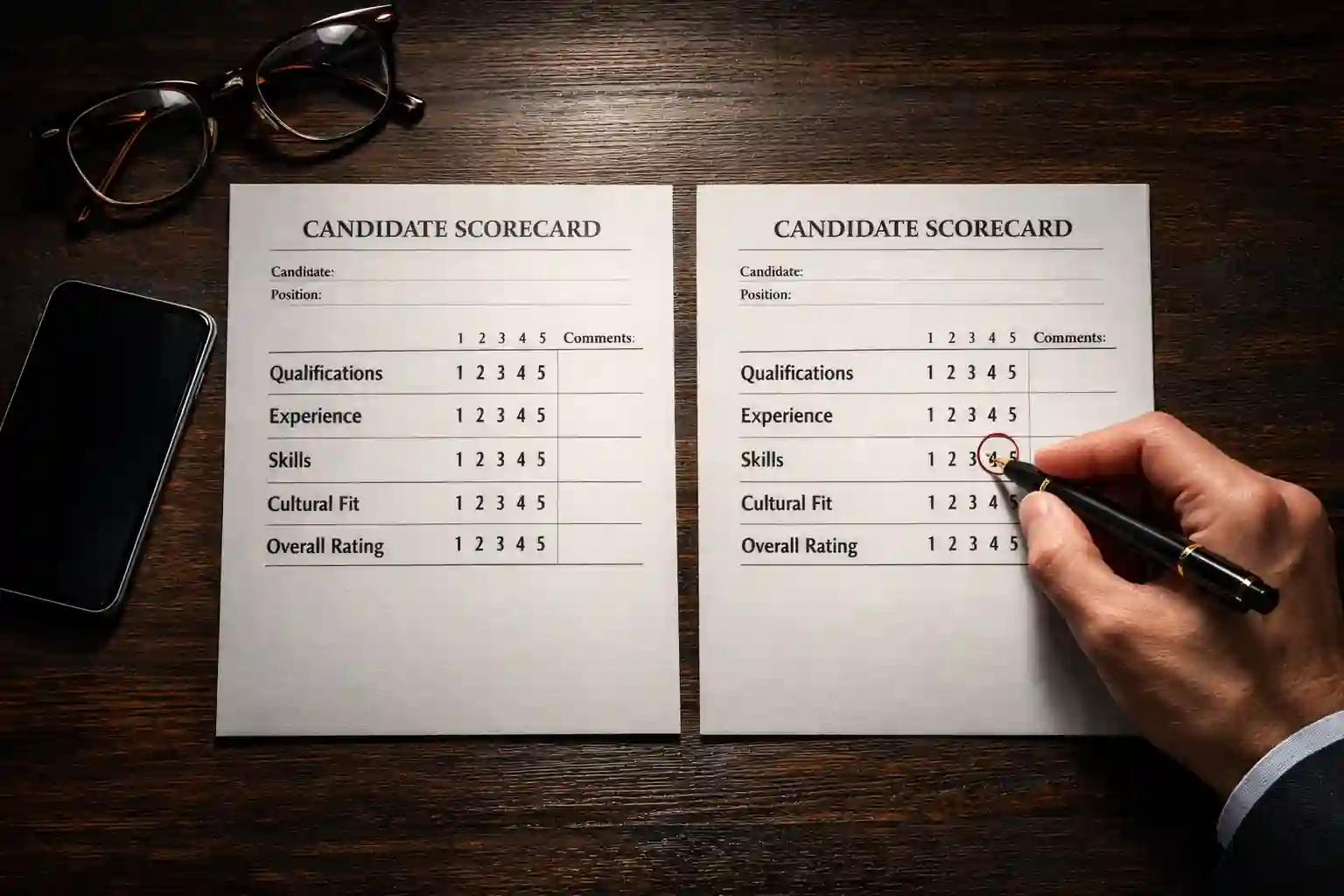
The structure must extend beyond the questions to the evaluation itself. Every interviewer should use a shared rubric to score the answers. This ensures that "good leadership" means the same thing to everyone on the panel. In 2026, leading companies use "Interview Calibration" sessions to ensure that all managers are scoring consistently. This builds a sense of belonging and alignment within the team. Everyone is working toward the same standard of excellence, which is the hallmark of a high performance organisation. It moves the focus from "Who do I like?" to "Who can deliver the most value?"
Standardise your hiring process
Start using Maslow to bring structure and evidence to every interview.


