
For many hiring managers, the job ends once a "No" decision is made. They move on to the next candidate, leaving the task of notification to HR or, worse, leaving it undone entirely. In 2026, this is a major failure of leadership. Closing the loop with candidates by providing constructive, evidence based feedback is not an optional extra; it is a critical part of the recruitment lifecycle. Providing feedback is an act of professional respect that acknowledges the candidate's investment of time and energy. It satisfies the human need for justice and provides the closure needed for the candidate to move forward in their career.
The reputation of the "Constructive Rejecter"
Word spreads quickly in professional circles. If you are known as a manager who provides valuable feedback, you will find it much easier to attract top talent in the future. Candidates respect managers who are honest and helpful. This builds your personal status and the "esteem" of your team. In 2026, elite professionals are looking for coaches, not just bosses. By providing feedback even when you aren't hiring them, you are demonstrating your value as a leader. This creates a positive feedback loop for your employer brand, making your company a "destination of choice" for those who value growth and self-actualisation.
How to give feedback that actually helps
Feedback should never be vague. "You weren't a fit" or "we went with someone with more experience" is useless. In 2026, high quality feedback is based on the objective criteria from your scorecard. Focus on the specific competencies where the candidate fell short and provide examples from the interview. "Your technical solution was strong, but we were looking for more detail on how you handle stakeholder conflict." This level of precision provides the candidate with the "security" of knowing exactly why they weren't selected. It removes the anxiety of the unknown and gives them a clear path for improvement.
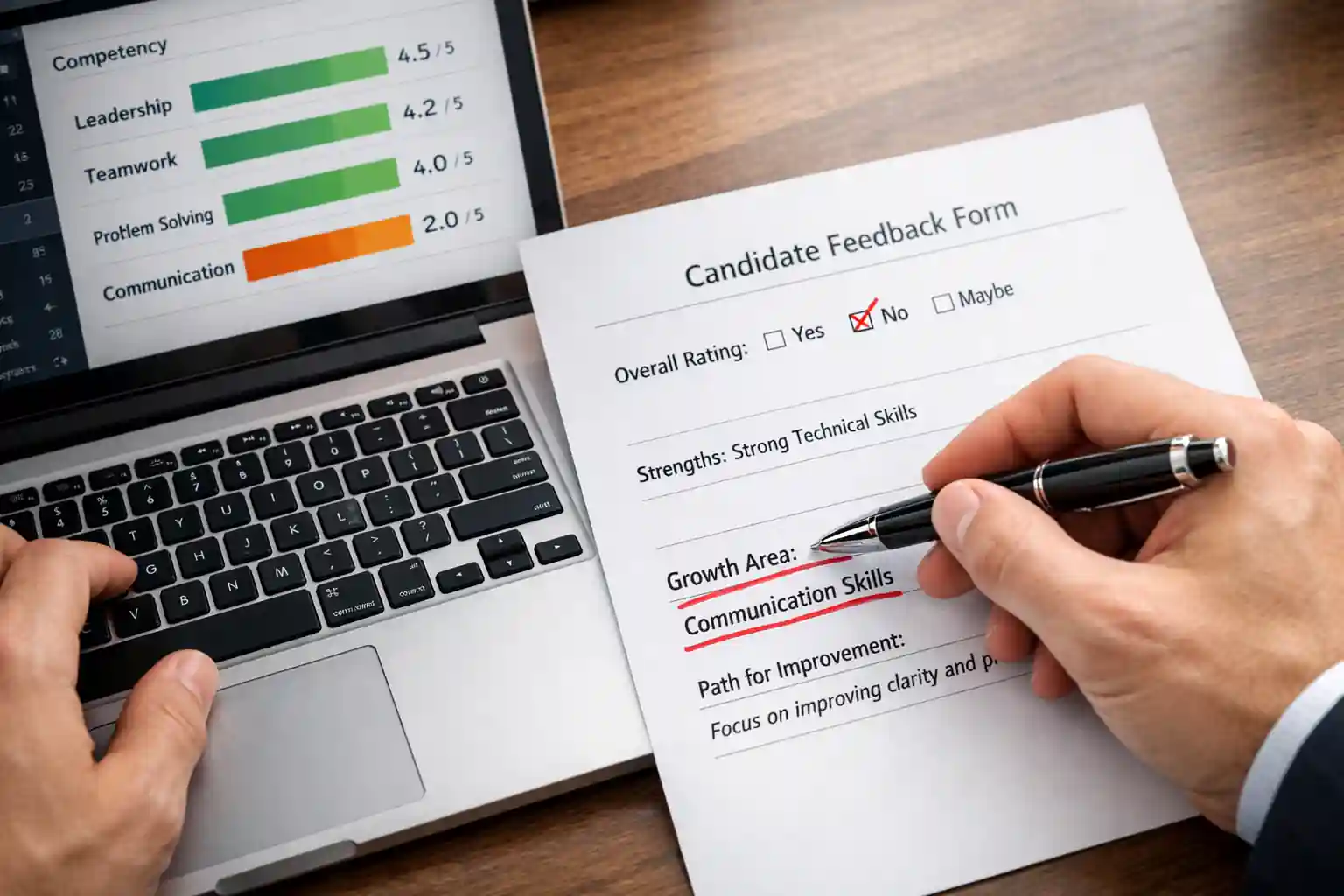
The legal and ethical case for documentation
Providing feedback is also a matter of risk and defensibility. If you have a documented, evidence based reason for your decision, you are protected against claims of bias or unfairness. This is particularly important for large organisations in 2026. By sharing the "why" with the candidate, you are demonstrating that your process is transparent and fair. This satisfies the organisational need for stability and compliance. It ensures that your hiring decisions are beyond reproach and that your team maintains a reputation for professional excellence and integrity.
““A rejection without feedback is a wasted opportunity for both the candidate and the company.””
Using feedback to refine your own process
The act of formulating feedback often reveals flaws in your own hiring process. If you find it difficult to explain why a candidate wasn't right, it may be because your criteria were too vague or your questions weren't sharp enough. This realization satisfies the manager's need for mastery. It allows you to iterate and improve your "talent engine" over time. By taking feedback seriously, you are not just helping the candidate; you are helping yourself become a more effective evaluator of talent. This focus on continuous improvement is what separates average managers from exceptional ones.
Standardise your hiring process
Start using Maslow to bring structure and evidence to every interview.


