
In the high pressure environment of modern recruitment, many hiring managers still rely on their "gut feel" to make final decisions. They believe that years of experience have given them a unique ability to read people. However, in 2026, the data tells a different story. Gut feel is not a superpower; it is a repository for unconscious bias. When you hire based on a "feeling," you are often just hiring people who look, talk, and think like you. To build a truly high performing and diverse team, you must replace intuition with the objective clarity of interview scorecards.
The failure of the "Good Chat"
We have all had interviews that felt like a great conversation. The candidate was charming, shared your interests, and made you feel at ease. But a good conversation is not a predictor of job performance. In fact, "likeability" often masks a lack of technical competence. This creates a state of professional instability where new hires struggle to meet the actual demands of the role. By using a scorecard, you force yourself to evaluate the candidate against specific, pre-defined competencies. This satisfies the organisational need for mastery and achievement by ensuring the best person for the job is the one who actually gets it.
Designing for objectivity
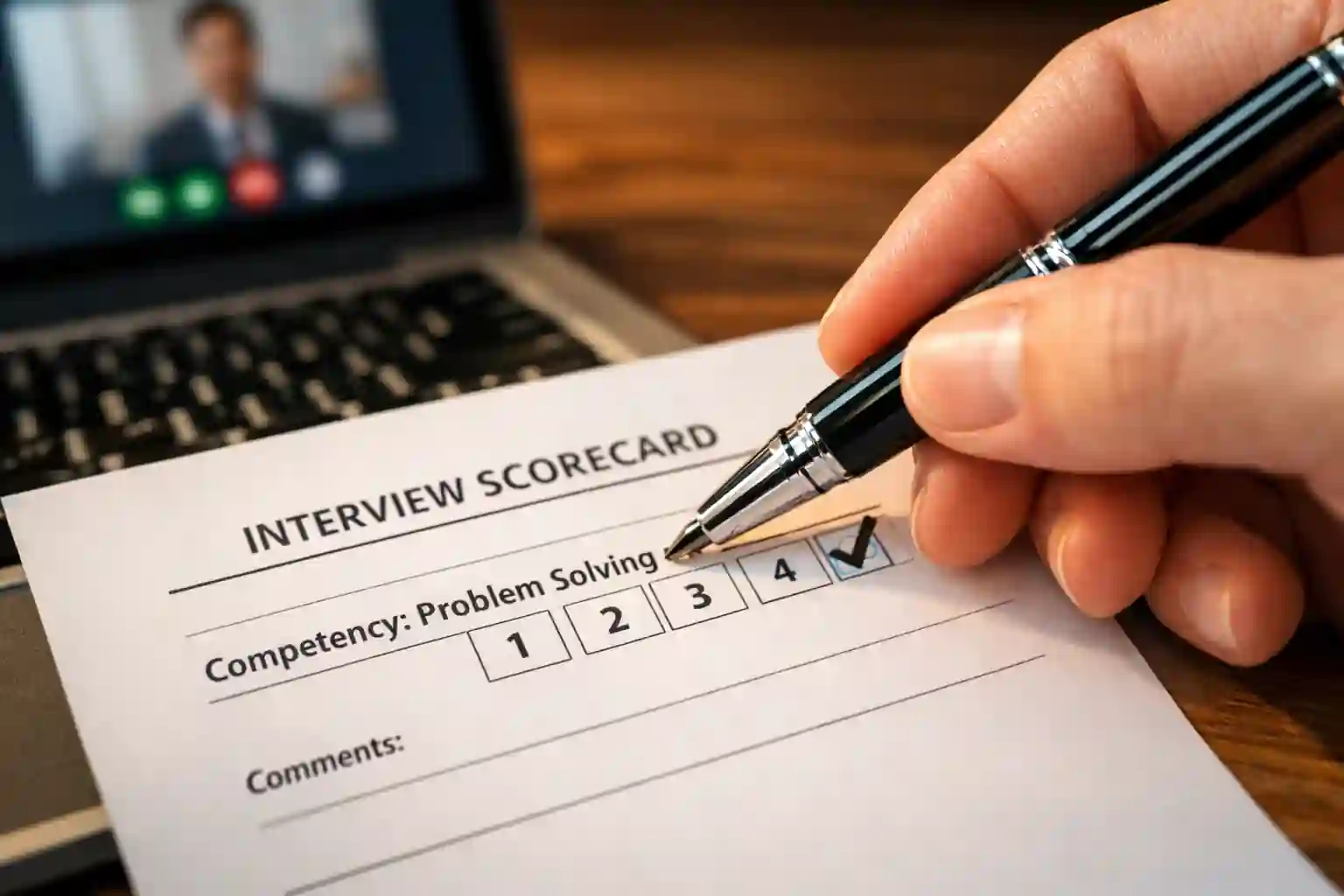
A scorecard is only as good as the criteria you put into it. Before the interview begins, you must define exactly what success looks like for the role. This means identifying the top five competencies required and the specific evidence you will look for to prove them. In 2026, the most effective hiring managers use a standardised five point scale for every answer. This removes the ambiguity of "he seems okay" and replaces it with a documented score. This transparency builds trust within the hiring panel and provides the risk and defensibility required by modern HR standards.
The power of the evidence based debrief
The scorecard truly proves its value during the post interview debrief. Instead of a vague discussion about "vibe," the panel can compare objective scores. If one interviewer scored a candidate a 2 on "problem solving" while another scored them a 5, you can have a focused conversation about the specific evidence each person saw. This process satisfies the human need for justice and fairness. It ensures that the candidate is being judged on their actual performance rather than the interviewer's subjective mood. By the end of the debrief, you have a clear, data backed decision that everyone can commit to.
““A scorecard doesn't tell you who to hire; it tells you who has the skills to do the job.””
Reducing cognitive load for the manager
Interviews are mentally exhausting. When you are trying to manage the conversation, take notes, and evaluate a candidate simultaneously, your brain takes shortcuts. These shortcuts are where bias thrives. A scorecard acts as an external memory bank, allowing you to focus on the candidate's answers while ensuring you don't forget to evaluate key skills. This satisfies the manager's need for security and confidence. You no longer have to worry if you "missed something" or if you were influenced by a candidate's final anecdote. The data is there, in black and white, ready to guide your final choice.
Standardise your hiring process
Start using Maslow to bring structure and evidence to every interview.


